
EMDR & trauma therapy · specialism childhood trauma
childhood trauma:
You wanted to do things differently from how you were brought up
You know that for sure. And yet you can feel it. A tone you recognise. A reaction to your child that slips out before you can stop it, and lingers long afterwards. A distance that suddenly appears.
These are traces of what you yourself have experienced. And traces can be processed.
Free intake of approx. 20 minutes, with no obligation
You know something isn’t quite right
You can tell by the way you are as a mother
Childhood trauma doesn’t necessarily have to involve abuse or a major crisis. For many mothers, it was something more subtle. An upbringing where you had to perform to fit in. A parent who wasn’t really there, even though they were physically present. The feeling that your feelings didn’t matter, or that they were simply a nuisance. Criticism that was harsher than it should ever have been. Experiences like these shape you. They determine how you see yourself and how you form attachments to others later in life.
When you become a mother yourself, these experiences come to the surface.
You might recognise this:
- You react to your child in the same way your parent reacted to you, and that puts you off.
- You find it hard to get really close, even when you want to.
- You quickly become overwhelmed, or feel guilty after a row with your child.
- As a mother, you feel insecure, as if you’re never doing enough or are never good enough.
- Old pain resurfaces in situations involving your child that really shouldn’t have anything to do with you.
- You recognise patterns from your own upbringing that you want to consciously break, but can’t seem to stop.
You’re not overreacting
These are signs that your nervous system hasn’t been able to process something.
Why it keeps triggering
Why it doesn’t go away on its own
Attachment begins in early childhood. How safe you felt back then with the people around you largely determines how you respond to emotional closeness as an adult. If, as a child, you were not consistently taken seriously, kept safe or comforted, your nervous system learns that closeness is uncertain. That you can only rely on yourself. That showing your feelings makes you vulnerable.
Those beliefs lie dormant. Until you have children of your own. Suddenly, someone asks you to provide exactly what you yourself may never have received. That’s not something you can solve with sheer willpower. It requires coming to terms with what happened in the past.
That explains the feelings, your reactions and your avoidance. You’re not overreacting, and you’re not weak either. These are signs that your nervous system hasn’t been able to process something fully.
And that is exactly what EMDR works on.
How it works
How EMDR works in cases of trauma
- 1You briefly activate the memoryIn a safe environment, we’ll briefly revisit the traumatic memory. You don’t need to go into every detail.
- 2You are following a distracting stimulusAt the same time, using VR glasses or an online EMDR platform, you follow a movement with your eyes.
- 3Your brain processes it againThis causes the memory to be stored in a new way. The emotional impact diminishes.
- 4The memory touches you in a different wayIt doesn’t disappear, but it doesn’t affect you in the same way anymore. You get some breathing space again.
What this could mean for you
- You’re less likely to react automatically based on old habits
- You have more distance between what happens and how you react
- You can get closer to your children without that old pain getting in the way
- Feelings of guilt about being a mother are easing
- Je doorbreekt wat je anders ongewild zou doorgeven
For a single-issue trauma, an average of 3 to 8 sessions is required. In more complex or long-term cases, this may be more. During the intake, we will discuss your situation and draw up a plan together.
Take the first step
An intake is free of charge and without obligation.
In around 20 minutes, we’ll discuss together whether EMDR is right for you.
Who is this for?
Who is this suitable for?
You can contact Moms&More if you’d like to undergo EMDR for childhood experiences that are currently affecting your role as a mother. You don’t need to have an official diagnosis. Nor do you need to know exactly which memories are relevant. We’ll work that out together.
You’re also welcome with:
Practical Information
How it works
Moms&More offers one-off sessions. There’s no set programme, and no long-term commitment that you have to commit to in full beforehand. Each session lasts 50 minutes. Online or in person, whichever suits you best.
We always start with a 20-minute intake. During this session, we’ll discuss whether EMDR is suitable for your situation and I’ll explain what you can expect. This intake is free of charge and there’s no obligation.
Reimbursement. Psychosocial therapy and EMDR may be (partially) reimbursed under your Dutch supplementary health insurance. This varies depending on your insurer and policy. Please check with your insurer to see if treatment at Moms&More is covered by your Dutch supplementary insurance.
Frequently Asked Questions
FAQ's about EMDR for childhood trauma
A 50-minute session costs €97. Psychosocial therapy and EMDR are (partially) covered by many Dutch supplementary health insurance policies.
We can usually schedule the first session within 3 to 4 weeks. There is currently no long waiting list.
The intake is free of charge and there is no obligation. You decide for yourself if, and when, you want to start. This intake lasts approximately 20 minutes and can take place online or at the practice in Woerdense Verlaat.
Yes. EMDR is one of the most well-established methods for processing childhood trauma. The method focuses on specific memories that carry emotional weight, even if those memories are years old. You don’t have to relive the trauma in order to process it.
That depends on the situation. Childhood trauma often involves multiple memories. During the intake, we’ll discuss your situation and draw up a plan together. You set the pace.
Yes. You don’t need to know in advance which memories are relevant. During the inatek and the first few sessions, we’ll work together to identify which issues are the most significant.
No. EMDR works even if you simply trigger the feeling or the image, without describing the details. You decide for yourself what you want to share.
Many women who come here have already talked about what happened. EMDR works through the nervous system. People who previously saw little benefit from talk therapy often find that EMDR does work for them.
Yes. Online EMDR has been proven to be effective. We use eye movements via the screen. You will need a laptop or desktop computer with a camera and headphones, and a quiet environment. Most clients find there is no difference compared to an in-person session.
That is certainly possible and quite common. During the intake, we’ll work together to identify the issues at hand and decide where best to start.
Who you work with
Let me help you
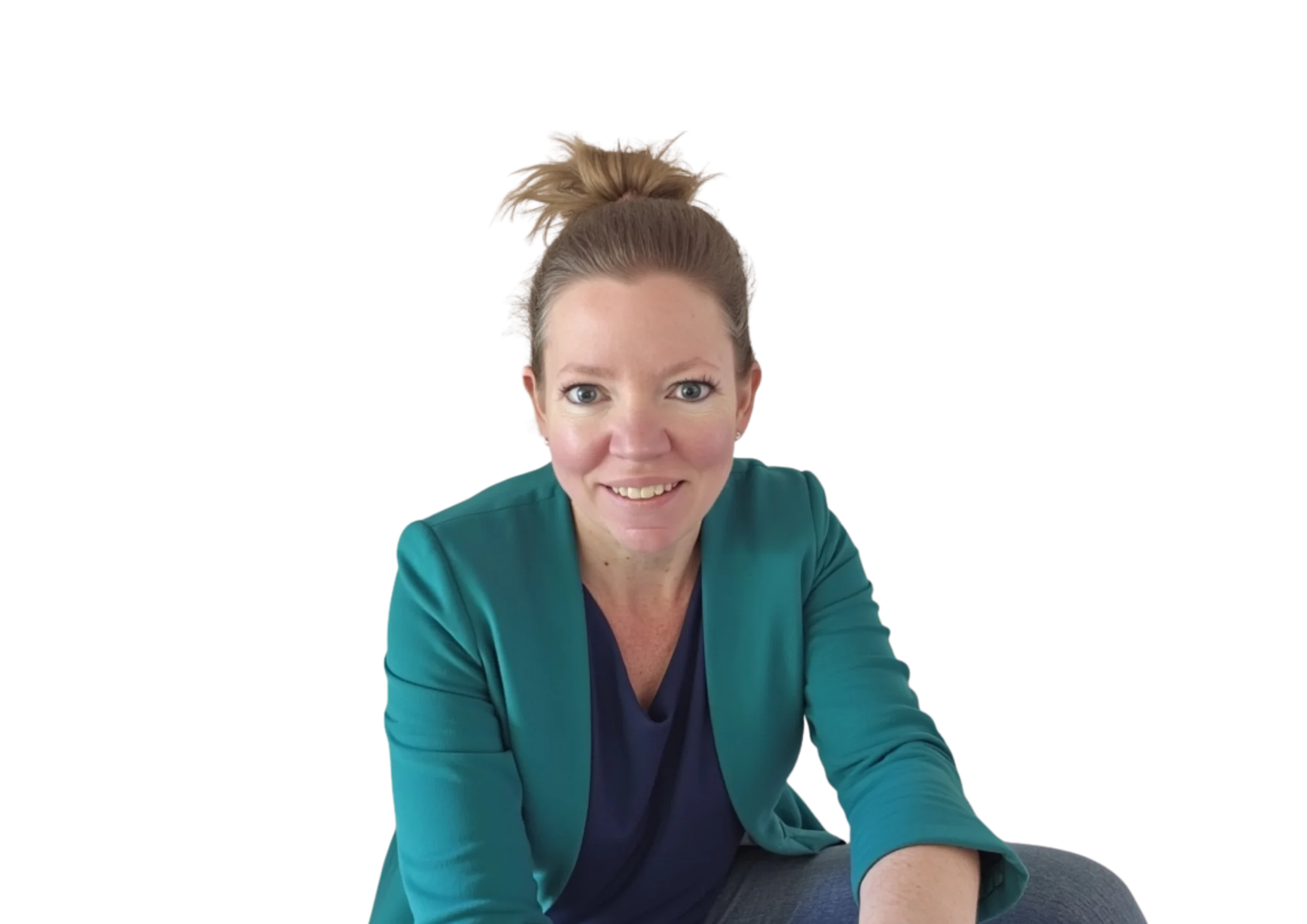
My name is Nikolien Martina. I am a qualified and registered psychosocial therapist, specialising in trauma and EMDR.
Moms&More is my practice specifically for mothers. I see how the combination of personal pain and the responsibility for your children takes its toll. The women who come here have been doing their best for long enough, without it seeming to make much of a difference.
I ask the questions you may have been avoiding for a while. Because that’s the only way to bring about real change.
What others are saying
Stories from mothers who have gone before you
I came to Nikolien because I realised I was doing exactly the same things my mother used to do. Snapping at people, being hard on myself and on my children. I knew I wanted things to be different, but I couldn’t manage it. Through EMDR, I discovered just how much my own childhood still influenced me. I’m calmer now, feel less guilty and have much more confidence in myself as a mother.
I always thought my childhood had been ‘pretty okay’. It wasn’t until I became a mother myself that I realised just how much old pain was still there. Situations involving my daughter affected me much more deeply than made sense. Thanks to the sessions with Nikolien, the tension has now eased and I feel much more connected to my daughter and to myself.
You don’t have to do this on your own
You don’t have to carry this burden any longer
An intake is free of charge and without obligation. Together, we’ll assess whether EMDR is suitable for your situation and what you can expect.
Would you prefer to ask a question first? Send a WhatsApp-message or contact me.
May be (partially) covered by your Dutch supplementary health insurance